
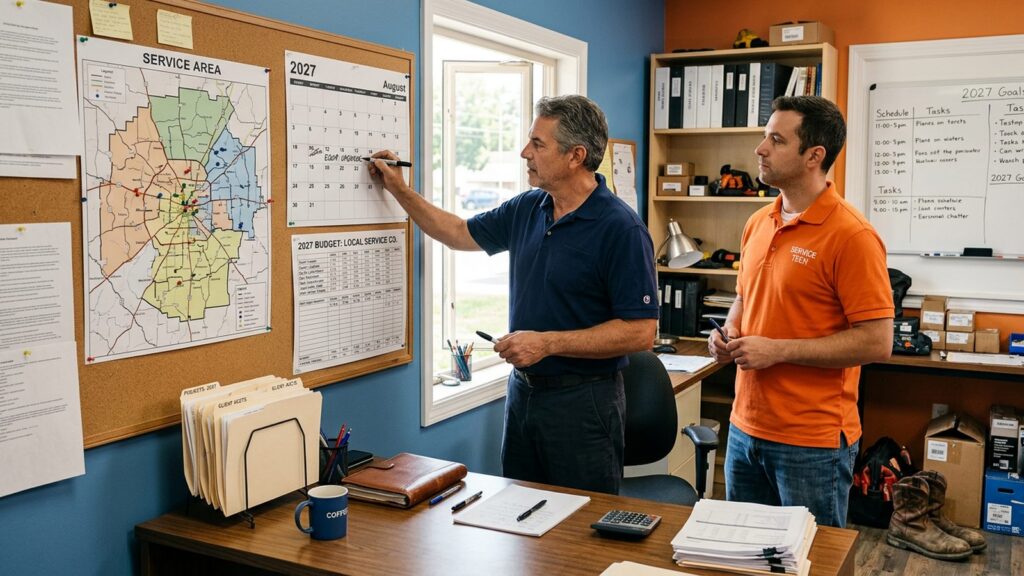
Start planning your 2027 marketing strategy now, in July. For a home services company, the second half of 2026 holds most of what you need: a full peak season of results, customer feedback while it is fresh, and enough runway to build the pages, creative, and tracking a new plan requires before January.
Owners who wait until December usually end up renewing last year’s plan with new dates. Here is how to use the next six months instead.
Why July is the right time to start
Most home services businesses run on seasons. Roofing follows storm season and dry weather. HVAC peaks at the temperature extremes. Plumbing and water damage restoration spike with freezes and heavy rain. By midsummer you have seen at least one 2026 peak and can compare it with 2025.
Starting now also separates planning from execution. Busy fall months and the year-end close leave little room for careful thinking. Anything that needs building for 2027, whether new service pages, new ad creative, call tracking, or CRM changes, takes weeks of work and testing. If those decisions wait until January, the first quarter becomes a setup period instead of a growth period.
The inputs that shape a strong plan
Your own results, tied to booked jobs
Pull the last 12 to 24 months of marketing data. Look past clicks and form submissions. Find which channel produced booked jobs and revenue, and how much media investment each booked job required.
If you can’t answer that today, fixing it is the first item in your 2027 plan. Call tracking, CRM stages that record job outcomes, and consistent source tagging make every later decision possible.
Look at timing too. When did the phone ring most? When did inquiries rise while bookings lagged? Google Trends shows how search interest in your services moves through the year in your region, which helps you decide when to increase media investment and when to hold.
What customers told you
Your customers have already explained how they found you and why they chose you. Read your reviews, listen to recorded calls, and ask your office staff and technicians what homeowners ask before they book. Note the words people use and the concerns that almost stopped them. That language belongs in your ads and on your service pages.
Where competitors show up and you don’t
Search your core services in the neighborhoods where you want to grow. Note who appears in the map results, the ads, the organic listings, and AI answers. The gaps show you where to compete head-on and where to differentiate.
Business goals and capacity
Your marketing plan has to match what operations can deliver. How many new customers do you need in 2027? Which services carry the margin you want to grow? How many crews or technicians can you add, and when? A plan that fills the schedule in months you can’t staff wastes investment and hurts your reviews.
What most owners start too late
- Bringing in the right people. Office staff, field supervisors, and whoever manages the books should shape the plan, not react to it. Your customer service team knows which calls turn into jobs.
- Tools and tracking. A new CRM, call tracking, or reporting setup needs configuration and training. Decide in the fall so it is working on January 1.
- Website and creative. New service pages, landing pages, and ad creative take months to plan, produce, and approve. Brief them in the fall so they launch with the new year.
- Partner reviews. If you work with agencies or vendors, review what each delivered in 2026 against booked jobs, and settle agreements before the new year.
A planning timeline that works
- July: Gather performance data, customer feedback, and call recordings.
- August: Review competitors and search visibility, including maps and AI answers.
- September: Set 2027 goals, priorities, and your total marketing investment.
- October: Build channel plans and the measurement framework.
- November: Brief and produce creative, pages, and content calendars.
- December: Finish tool setup, test tracking, and confirm partner agreements.
- January: Launch, then watch the first 30 days closely.
Plan the investment, not a line item
Treat marketing as an investment with an expected return, and plan it that way. Start from the number of booked jobs you need. Work back through your close rate and average job value. Then set media investment by channel based on what each channel returned in 2026.
Hold part of the investment for testing. A new channel, a new service line, or a new neighborhood deserves a defined test with a clear signal to watch and a point where you stop or scale. That is the Signal-First approach: validate with leading indicators before you commit more.
Build in quarterly reviews. The goals stay stable. The channel mix and creative move with the results.
Decide how you’ll measure before you launch
Agree on the metrics before the new year starts. For most home services companies, the core set is qualified calls, booked jobs, revenue by source, and media investment per booked job. Decide who reports them and how often. When measurement is settled in advance, the quarterly review becomes a decision meeting instead of an argument about the numbers.
Good measurement also changes the conversation with your partners. When everyone looks at booked jobs and revenue by source, the discussion moves from activity reports to what to do next.
Start this week
Block two hours this month to pull your 2026 results by channel and by booked job. That one exercise will show you whether your 2027 plan can be built on data or whether the data itself needs fixing first. Either answer tells you where to begin.
Frequently asked questions
When should a home services company start planning its 2027 marketing strategy?
Start in July or August 2026. By then you have a peak season of results to review and enough time to build pages, creative, and tracking before January instead of during the first quarter.
What data should I use to plan next year’s marketing?
Use 12 to 24 months of results tied to booked jobs and revenue by channel, not only clicks or form submissions. Add customer reviews, call recordings, seasonal search patterns, and your capacity plan for crews and technicians.
How much should a home services company invest in marketing for 2027?
Work back from the booked jobs you need. Use your close rate and average job value to set a revenue target, then set media investment by channel based on what each channel returned in 2026, with a portion held for tests.
How often should I review my annual marketing plan?
Review it every quarter. Keep the goals stable and adjust channels, creative, and investment levels based on booked jobs and revenue, not activity metrics alone.
What makes a marketing plan data-driven for lead generation?
It sets investment by channel based on booked jobs and revenue, defines success metrics before launch, and reviews results on a fixed schedule. If you can’t trace a booked job to its source, fix tracking first.
Need a clearer view of what is actually driving growth? ajile MEDIA helps home service businesses connect marketing activity to qualified opportunities, booked calls, search visibility, and revenue influence. Book a strategy call to see where your marketing is producing signals, and where it is only producing noise.